PROGRAMME : Elephant Programme.
DURATION : 15 Days / 14 Nights..
PERIOD :Valid till 31st October 2005.
TOUR ITINERARY
Day 01: Colombo (FB)
Arrival and transfer to a Hotel in Colombo.
COLOMBO
Like many capital cities in developing countries, the face of Colombo is quickly changing. Skyscrapers now tower over the streets where old buildings once stood and modern shopping malls attract locals and foreigners alike in search of a bargain. However, in some parts the ‘Old World’ charm is retained, such as the 100-year-old clock tower and several British built colonial buildings. Other places of interest include the Pettah markets, the old Parliament in the Fort district, the new parliament in Thimbirigasyaya, and a wide variety of churches, mosques and temples that are sentiment to the many different religions that dominate the country. In terms of shopping, there is a wide range of colourful fabrics, batiks, handicrafts and other souvenirs. Clothes are also especially good value and there are a number of specialised outlets sure to satisfy the most serious of shoppers!
After lunch Colombo city tour including the Museum with a lecture and slide show on Asian
Elephant History.
Evening visit to "Gangaramaya" Temple with a presentation “Elephants and Buddhism”.
Dinner and overnight stay at a hotel in Colombo.
Day 02: Colombo - Udawalawe (FB)
After an early morning breakfast leaving to Udawalawe from Colombo.
From the gate entrance get into the 4WD vehicles (jeeps) to be driven (16km) with in the park. At the park you will be briefed about the Park rules & regulations.
Lunch at the Hotel. After lunch you will be taken for a safari tour in the park.
UDAWALAWE NATIONAL PARK is located approximately 200 km south-east of Colombo city. The 30,821 hectare dry zone game park has an annual rainfall of 1,524 mm and an average temperature of 29.40C. It is most famous for the many elephants that live there (about 400 in total). During a visit, it is not unusual to see whole herds – adults and young, feeding and bathing or playing in the water! In addition to this main attraction, the park is home to many water buffalo, water monitor lizards, sambar deer, monkeys and the occasional leopard, as well as being an exciting location for bird enthusiasts. A 4WD open-top safari is the only way to see all the wonders this protected reserve has to offer, and our experienced and knowledgeable nature guides will make this an unforgettable experience.
Night at a Hotel.
Day 03: Udawalawe (FB)
After breakfast bird watching & a safari in the morning. (if the guest wishes we can provide an evening safari.
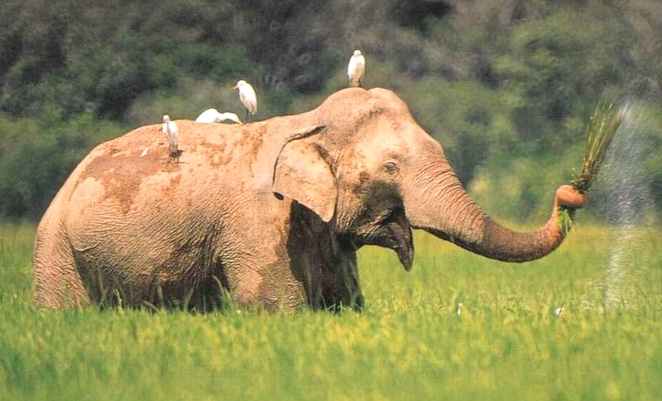 BIRD WATCHING AT UDAWALAWE
The safari will also be an unforgettable bird watching experience as Udawalawe has a wide variety of birds. The endemic species, the Red-faced Malkoha, has its favourite habitat in this parkland. Serpent Eagles, Hawk Eagles, White-bellied Sea Eagles, Black Eagles, Black Capped Bulbuls, Racket-tailed Drongos, Malabar Pied Horn Bills, White-necked Storks, Open Bills, Ibis, Shama (the Forest Nightingale), Strol-billed Kingfishers and peacocks are found in fair numbers.
Among the migrant birds are the forest wagtails, Indian Pitta, Whiskered Terns, Osprey Sand Pipers and Terns.
Lunch will be provided.
Back to the Hotel for a BBQ dinner and overnight stay.
Day 04: Udawalawe - Yala (FB)
After breakfast a morning safari which will finish at the Udawalawe gare entrance. Then visit the Elephant Transit Home.
ELEPHANT TRANSIT HOME.
This transit home, gives shelter to approximately 20 orphan baby elephants who have got abandoned mainly due human Elephant conflict. These babies will be looked after by the Wild life Department till they grow up to an age where they can survive on their own.
Lunch will be provided. After lunch leaving to Yala National Park. On your way visit Maduwanwela Walawa.
YALA NATIONAL PARK lies 24km northeast of Tissamaharama and 290km from Colombo on the southeast coast of Sri Lanka, spanning a vast 97,878 hectares over the Southern and Uva Provinces. The vegetation in the park comprises predominantly of semi-arid thorny scrub, interspersed with pockets of fairly dense secondary forest. Small patches of mangrove vegetation also occur along the coastal lagoons. The park is renowned for the variety of its wildlife (most notably its many elephants) and its fine coastline (associated with beautiful coral reefs). It also boasts a large number of important cultural ruins, bearing testimony to earlier civilizations and indicating that much of the area used to be populated and well developed.
"Maduwanwela Walawwa" is the powerful Singhala Divisional ruler lived, who was very famous for elephant capturing. Visit the famous Elephant Caral where hundreds of elephants were captured. Learn the story of Great Elephant - "Panamure Ath Raja".
Dinner and overnight stay at Yala Safari Game Lodge.
Day 05: Yala (FB)
After breakfast proceed Yala National Park for a full day safasri.
Lunch will be provided.
Back at Yala Safari Game Lodge for dinner & the night stay over.
Day 06: Yala - Pelwatta (FB)
After breakfast leaving to Pelwatta where Human-Elephant conflict is at its heights.
"Pelwatta"-sugar cane Plantation.
The
PELWATTE sugar plantation is a popular spot for hungry elephants from nearby sanctuaries. This is where you find the Human & Elephant conflict at its heist. Human Regular night patrols, electric fences, trenches and watchmen are inadequate to beat elephant tactics. Landing a big plantation in the established home range of elephants of Yala and Handapanagala is creating constant conflict between the plantations and the tempted hungry elephants.
Lunch will be provided.
Dinner and overnight at a Bungalow.
Day 07 : Pelwatta - Buttala (FB)
After breakfast Leaving to Buttala Tree Top Jungle Lodge.
On a ‘journey back to basics’, TREE TOPS JUNGLE LODGE offers a real jungle experience in a nature retreat with simple clay huts blending discretely into their beautiful surroundings of virgin forest, rocky hills, and abundant wildlife. The lodge is located near Buttala, in the Weliara wilderness, which is hidden between the Yala National Park and the Arahat Kanda mountains. This unique location is an ideal place to lose oneself in a completely different environment and learn about the rich history and ‘eco’-philosophy behind the whole ‘Tree Tops’ project. You can choose to relax in a hammock and admire the prolific birdlife or take a native style bath at the freshwater well, enjoy the thrill of a bullock cart trip through the wilderness to the ancient temples, visit the herds of elephants at the Weliara lake, learn about the traditional ayurvedic plant medicine using the plants in the area around the lodge or even try your hand at the native art of cooking rice and curry! With so much to see and do, it is quite possible to spend all your time in the close proximity of the lodge itself, but for those who want to venture further afield, it also provides an ideal base for exploring nearby locations of interest such as Yala National Park and various ancient Buddhist monuments.
Lunch will be provided.
NIGHTS IN ELEPHANT COUNTRY
Nights in the jungle are an experience of darkness and strange sounds. Most prominent of our wild visitors at Tree Tops are the wild elephants passing close by. Usually they are very silent but frequently we hear them braking branches, or trumpeting. The lucky ones will hear the ‘song of elephants’ – herds long distance communicating with sound waves like whales. This is a night phenomena; a rare experience of a traditional safari.
Elephants are always on the move and they come and go in the area around Tree Tops. Yala and bordering forests host ca. 500 elephants, making this area of Sri Lanka a most important elephant habitat with a density about one elephant per 2.5 km2.
Dinner and over night stay at Lodge.
Day 08: Buttala (FB)
After breakfast wake up to the sounds of nature. Have a tasty Sri Lankan breakfast at your convenience.
EXCURSION AT TREE TOPS JUNGLE LODGE.
Late morning join a 3-4 hours excursion accompanied by a team from Tree Tops lodge. Some visitors prefer just to kick back at the unique spot and meditate to the sounds of nature. There is a little library with books on nature and culture of Sri Lanka. Feel home, the staff will be happy to prepare good tea or coffee, check in the kitchen for hot water on the firewood. With more than 140 species counted and a quite open landscape birdwatching is excellent here. A few ones quite easily seen or heard are Grey- and Malabar Pied Hornbill, Green Bee-eater, Baya Weawer, Paradise Flycatcher, Shaheen Falcon, and Sri Lankan Jungle Fowl.
Nights in the jungle is a different experience of darkness and sounds.
Day 09: Buttala - Nuwara Eliya (FB)
Leaving to Nuwara Eliya from Buttala.
NUWARA ELIYA has a cool sparkling climate with the temperature changing around 13degC this is an exquisite and healthy city famous for its wide range in flowers. With buildings of English architecture everywhere in the city, it is affectionately called little England. The Victoria Park in the center of Nuwara Eliya, the highest town in Sri Lanka. Yellow-eared Bulbul, Blackbird, in winter Pied Thrush and Kashmir Flycatcher are very common.
Lunch will be provided
Evening at lesiure.
Dinner and over night stay at a hotel in Nuwara Eliya.
Day 10: Nuwara Eliya - Horton Plains - Kandy (FB)
Early morning visit to Mahaeliya National Park [Horton Plains]-The Elephant Hunting Ground of former British planters.
HORTON PLAINS NATIONAL PARK is undoubtedly one of the world’s best nature reserves. It is characterised by a beautiful landscape of rolling hills, covered in upper montane forest and wet patana grassland. In general, the forests are seen on the hilltops or upper slopes, and the grasslands in the valleys and lower slopes, eventually giving way to wetland habitats. Spanning approximately 10,000 hectares the park is also home to a wide variety of flora (57 species, 29 endemic to Sri Lanka) and 24 species of mammals such as elk, deer, giant squirrel, wild boar, wild hare, porcupine and leopard. For bird enthusiasts, there are 87 species (14 of which are endemic), including many migratory birds. The Plains also feature many interesting attractions such as ‘Baker’s Falls’, ‘Chimmini Pool’ and the famous ‘World’s End’ (a 3700 ft sheer drop that offers fabulous views of the tea estates below and all the way out to the distant southern coastline).
Lunch will be provided.
Finishing the visit proceed to Kandy for the evening.
Dinner & over night stay at a hotel in Knady.
Day 11: Kandy (FB)
After breakfast site seeing in Kandy.
KANDY was the last stronghold of the Buddhist political power against colonial powers. It is also the home of the Temple of the Tooth relic. Its architectural monuments date mainly from the 19th century, when Vikrama Rajashinha went on a building spree, the cost of which hastened the downfall and eventual surrender to the British forces.
Lunch at Hotel or restaurant in Kandy. After lunch visit to Dalada Maligaw.
DALADA MALIGAWA
The Temple of the Tooth or Dalada Malgawa dates from the 16th century, though most of the present buildings were built in the 19th century. Entering the shrine over a moonstone step, you pass a stone depicting the Indian goddess Lakshmi and a wall with frescoes illustrating the Buddhist conception of hell. The upper stories house the relic of the tooth, caged behind the gilded iron bars. Behind the tooth relic sanctuary is a hall with a number of golden Buddha statues and modern paintings, showing Buddha’s life and the arrival of Buddhism in the land. We end our tour just before the evening drumming begins, which precedes the ceremonious opening of the window for the public viewing of the casket with the tooth.
Dinner & over night stay at a hotel in Knady.
Day 12: Kandy - Minnariya NP - Kaudulla NP (FB)
After breakfast leaving to Sigiriya from Kandy. On your way visit to Minneriya and Kaudulla national parks.
Located between Habarana and Polonnaruwa, the 8890 hectares of MINNERIYA NATIONAL PARK consists of mixed evergreen forest and scrub areas and is home to favourites such as sambar deer, leopards and elephants. However the central feature of the park is the ancient Minneriya Tank (built in 3rd century AD by King Mahasena). During the dry season (June to September), this tank is an incredible place to observe the elephants who come to bathe and graze on the grasses as well as the huge flocks of birds (cormorants and painted storks to name but a few) that come to fish in the shallow waters.
Lunch will be provided. After lunch a visit to Kaudulla National Park.
Opened in 2002 just before the massive Wilpattu reopened, KAUDULLA is Sri Lanka’s newest National Park. Situated around the ancient Kaudulla tank, the park provides a 6656 hectare elephant corridor, only 6 km from off the main Habarana–Trincomalee road. With fantastic opportunities to see many elephants at close range, the park has become a popular destination for wildlife safaris that also take in leopards, sambar deer and the occasional sloth bear! As an additional novelty, you can go for cataraman rides on the tank.
Dinner and over night stay at a Hotel, bordering Kaudulla National Park.
Day 13: Kaudulla - Sigiriya - Polonnaruwa (FB)
After breakfast leaving to Sigiriya.
The ancient city of SIGIRIYA was designated a cultural World Heritage Site in 1982. It is also proposed that the site should be named the eighth wonder of the world, indicating it is in the same league as other international wonders such as the Grand Canyon and Ancient Pyramids. Translated as ‘Lion Rock’ into English, the name of the monument indicates the way in which visitors used to begin their final ascent to the top – through the open jaws and throat (‘giriya’) of a lion (‘sinha’). Unfortunately, the only remains of this lion figure are the gigantic paws, sculpted into the side of the rock. The topography of the area is flat except for the massive rock outcrop of the fortress itself (which rises an incredible 600 ft up from the green scrub jungle). The unusual rock is particularly interesting due to its flat top (nearly an acre in size), that was used in its entirety to build King Kasyapa’s fortress complex, still evident by the presence of the extensive ruins.
SIGIRIYA SANCTUARY with extent of 51,099 ha, is in the Polonnaruwa District.Seegiriya also has a large population of migratory elephants, apart from the presence of many other large mammals. Another important factor is the presence of Loris is this sanctuary. The bird life is very reach in this sanctuary. More than 150 species of birds can be seen. Oriental Sharma, Pompador Green Pigeon, Shahin falcon, Crested hawk Eagle, Rufus bellied hawk Eagle and Greater Racket Tailed Drongo is very common.
Lunch will be provided. Evening elephant back ride safari at Habarana.
ELEPHANT SAFARI AT HABARANA
You will get to spend a few hours with a tamed Elephant riding through the forest in Habarana. Where you will have ample opportunities to take photographs of birds, animals, reptiles etc.
Finishing the Elephant ride proceed to Polonnaruwa.
POLONNARUWA
At nearly 1000 years old,
POLONNARUWA is one of Sri Lanka’s ancient capital cities (and part of the famous ‘Cultural Triangle’). Although King Vijayabahu 1 was the first to claim the city as his capital, it was King Parakramabahu who made it what it is today, with its massive buildings, ornate parks and the ‘pièce de resistance’ – a 2500 hectare tank called ‘Parakrama Samudra’ (‘Sea of Parakrama’). The city itself is divided into new and old town with the impressively preserved ruins split into five main areas, including ‘The Quadrangle’ (aka ‘Terrace of the Tooth Relic’), the Northern City group and the Rest House group (with the royal palace ruins of ‘Nissanka Malla’). Due to its reasonably compact layout, the ruins can be easily explored on foot, and with the surrounding area’s flat well maintained roads, you can leave the car behind and jump on a bicycle to get around!
Dinner and overnight at a hotel in Polonnaruwa.
Day 14: Waikkala (FB)
After breakfast, sight seeing at Polonnaruwa. Then proceed to Waikkala.
Lunch on the way at a hotel or restaurant.
WAIKKALA
Waikkala is located in the Puttalam District, which falls into the dry zone category. Waikkala is in the midst of marine, coastal, estuarine, mangroves, marshland and man made habitat systems. All of these have contributed to the avifaunal diversity visible in the immediate surrounding. Much of the avifauna is characteristically wetland. More than 60 species of birds can be observed here.
Dinner and over night stay at a hotel in Waikkala.
Day 15: Air port
After breakfast client will leave for their next destination.
- End of Programme -